
About us
Coconut sugar
(also known as coco sugar, coconut palm sugar or coco sap sugar)
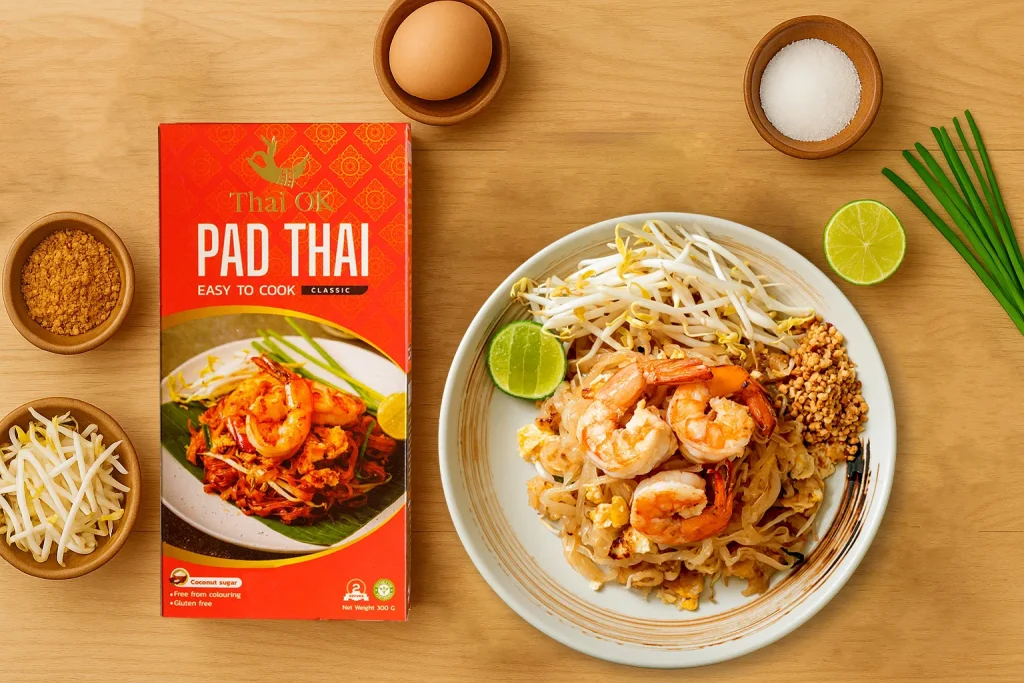
Pad Thai
Our products crafted from premium-quality ingredients sourced from certified and trusted producers. The products prepared under strict hygienic standards to ensure food safety and to preserve the authentic, traditional flavors of Thai cuisine.
In some areas, predominantly in Thailand, the terms "coconut sugar" and "palm sugar" are often used interchangeably.
However, coconut sugar is different both in taste, texture and manufacture methods from palm sugar, which is made from the sap in the stems of the Palmyra palm, the date palm, the sugar date palm, the sago palm or the sugar palm.
How
it's Made
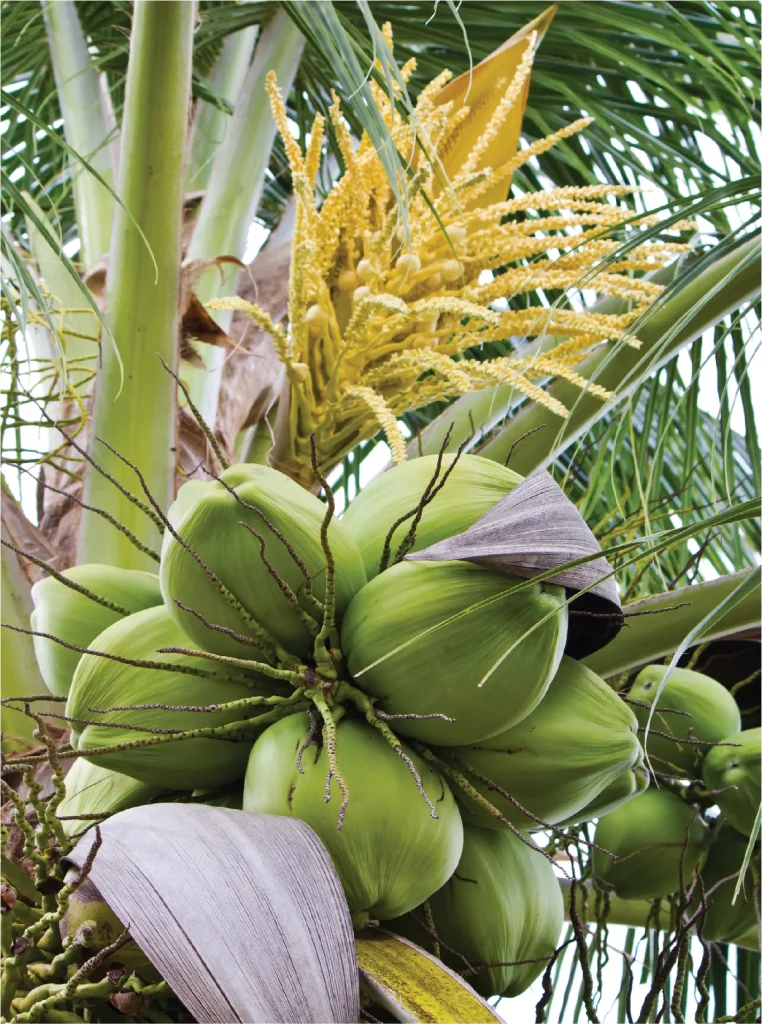
Coconut sugar comes in crystal or granule form, block or liquid. It is essentially a two-step process. It starts with harvesting or “tapping” the blossoms of a coconut tree.
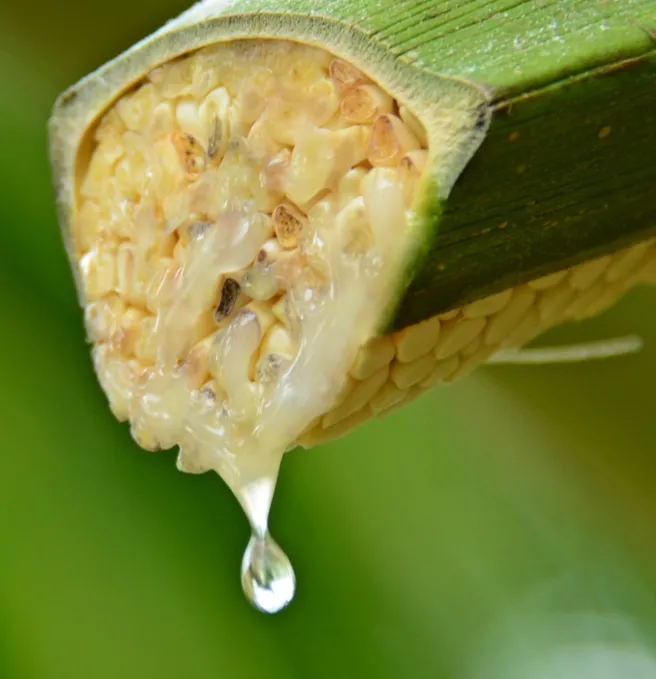
Farmers make a cut on the spadix and the sap starts to flow from the cut. The sap is then collected in bamboo containers. The sap collected is then transferred into giant woks and placed over moderate heat to evaporate the moisture content of the sap. The sap is translucent and is about 80% water. As the water evaporates, it starts to transform into a thick syrup-like substance known as a “toddy”. From this form, it is further reduced to crystal, block or soft paste form, or it remains in this form. Essentially, coconut sugar’s form depends on the moisture content of the toddy.
Why
choose this
Coconut sugar is subtly sweet almost like brown sugar but with a slight hint of caramel however, since organic coconut sugar is not highly processed, the color, sweetness and flavor can vary depending on different factors. Coconut sugar’s color, sweetness and flavor can vary slightly from packaging to packaging depending on the coconut species used, season when it was harvested, where it was harvested and even the way the “sap” or “toddy” was reduced.
The Glycemic Index of coconut sugar is 35 and is classified as a low glycemic index food. It is considered to be healthier than refined white sugar and brown sugar. It can be used as a 1:1 sugar substitute for coffee, tea, baking, and cooking.
Coconut sugar has a high mineral content, being a rich source of potassium, magnesium, zinc, and iron. In addition to this it contains Vitamin B1, B2, B3, and B6. When compared to brown sugar, coconut sugar has 36 times the iron, four times the magnesium, and over 10 times the amount of zinc.